Viscous Plateaus
Soft modularity, personal workshop
Even if I spent the last few years in the VFX industry, I’ve somehow managed to recover my passion for design and architecture. Two months ago, I started with an intense personal workshop. The goal was to learn as much as possible about Houdini and its procedural workflows (mainly SOPs and VEX).
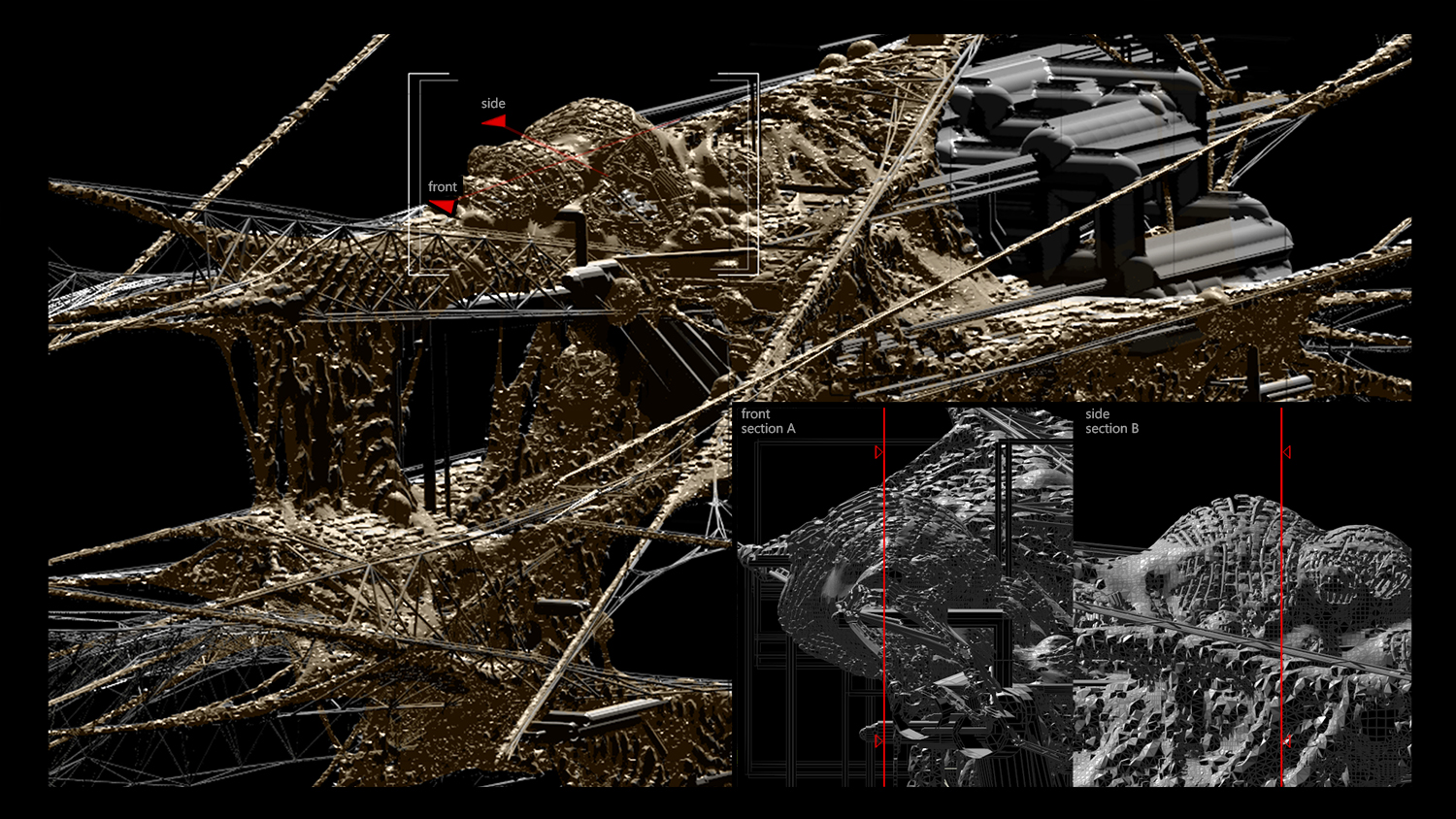
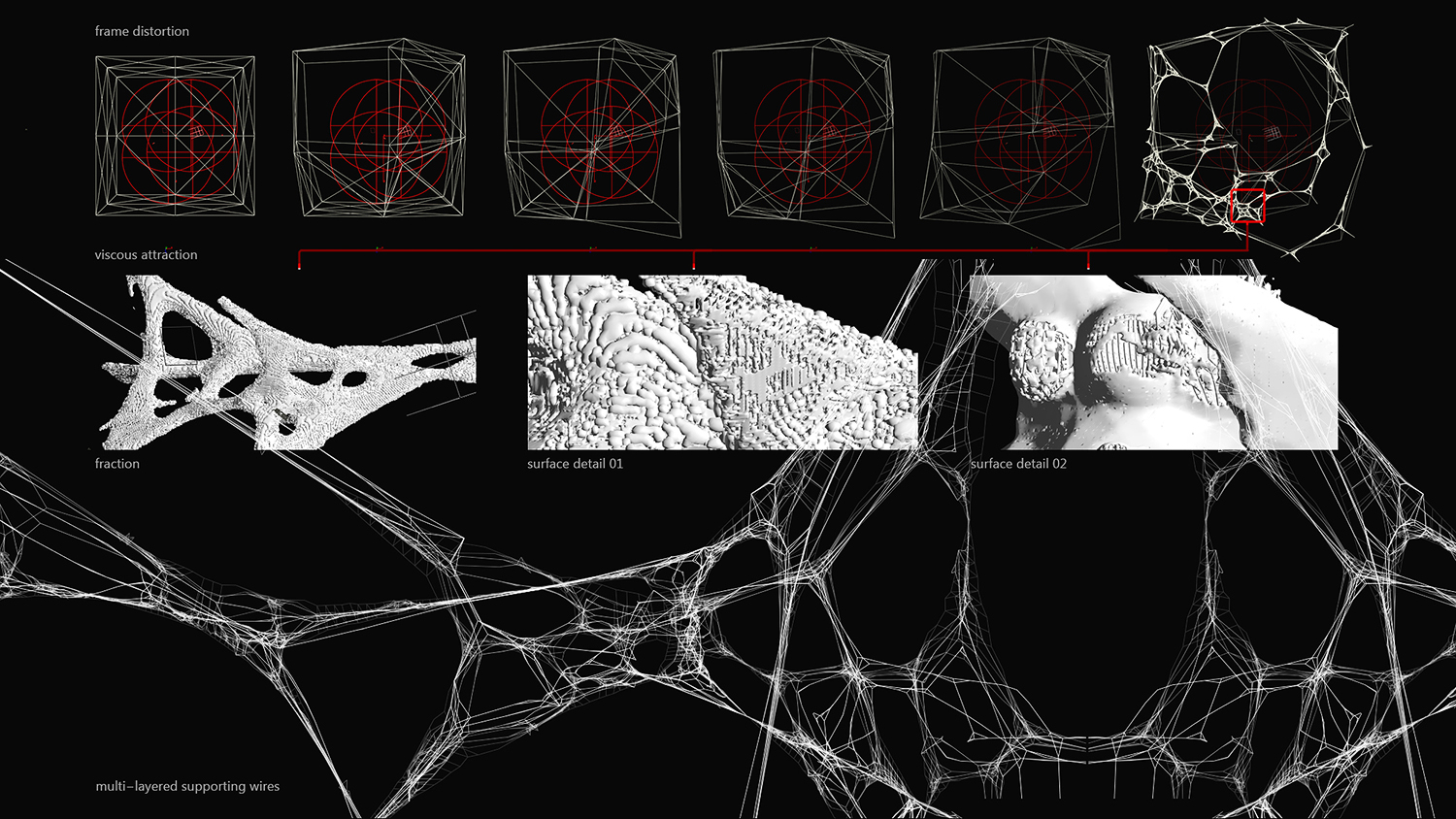
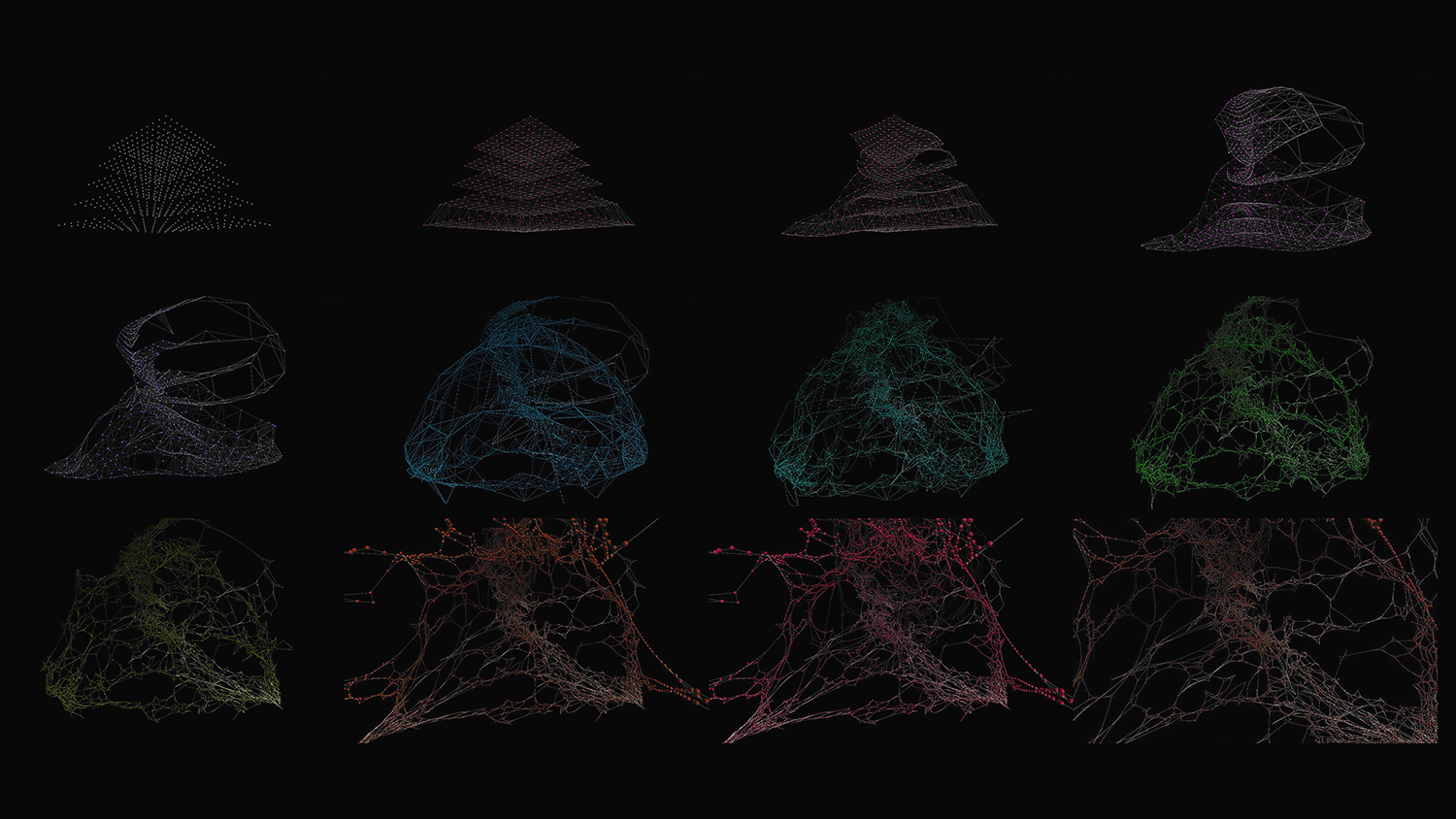
To be honest, at the beginning there wasn’t any clear idea of the final product, however, this little anxiety was slowly vanishing with every small step I made. I have discovered a lot of design possibilities and gained freedom when it comes to searching for desired shapes. Behind almost everything, there is a process that is composed of simple design steps – from points and lines to surfaces and volumes. Houdini can handle this logic very well.
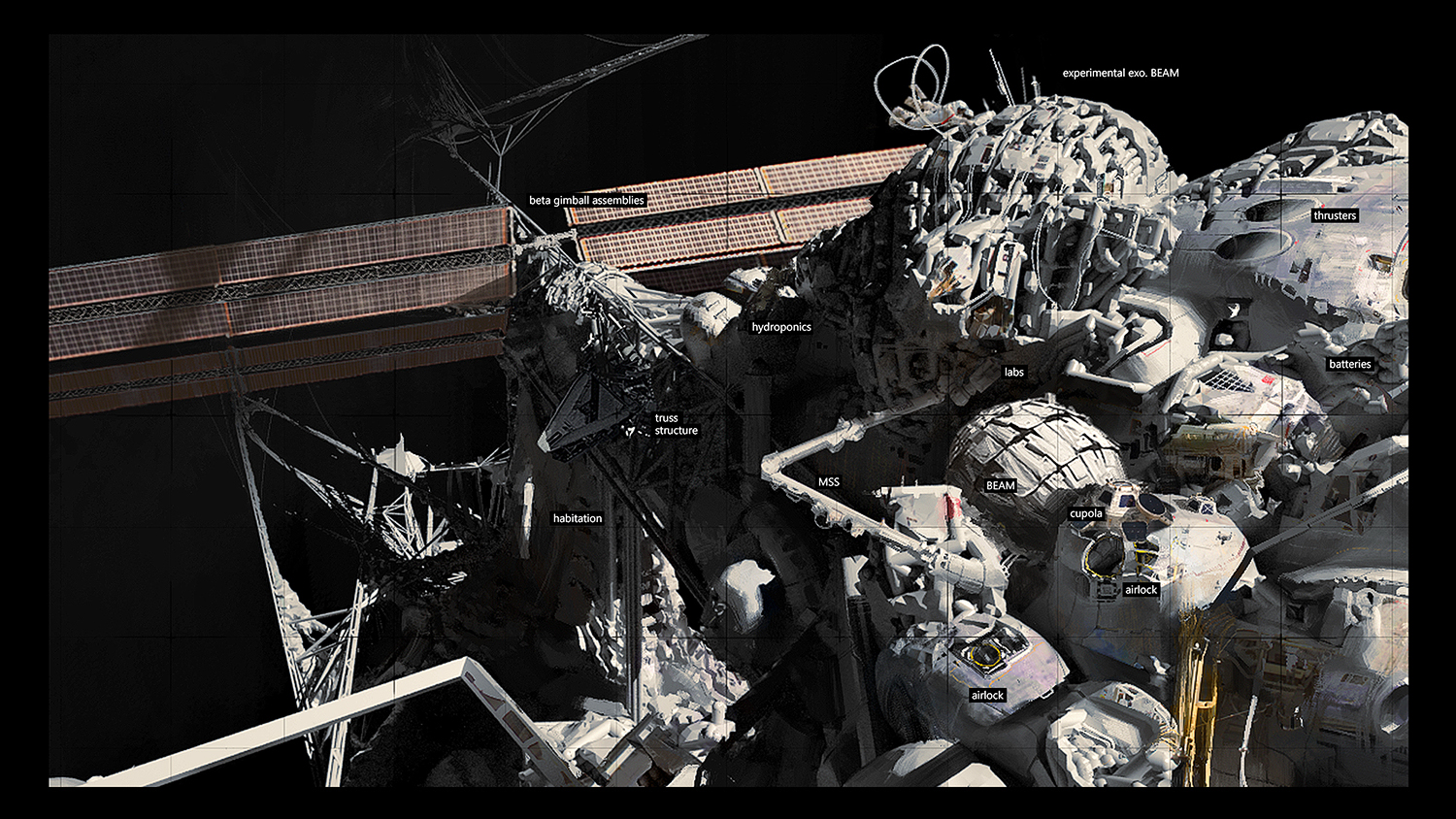
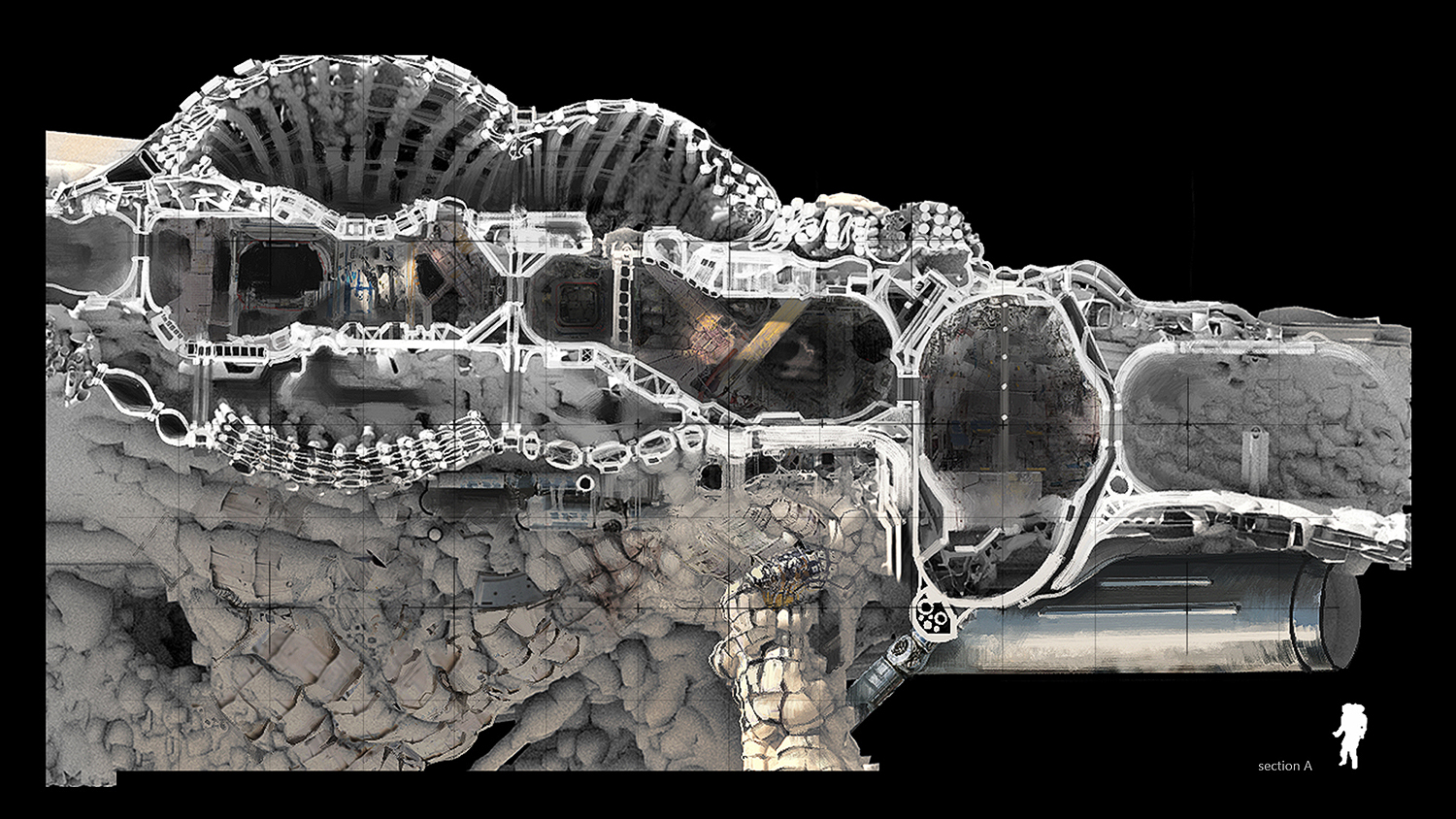
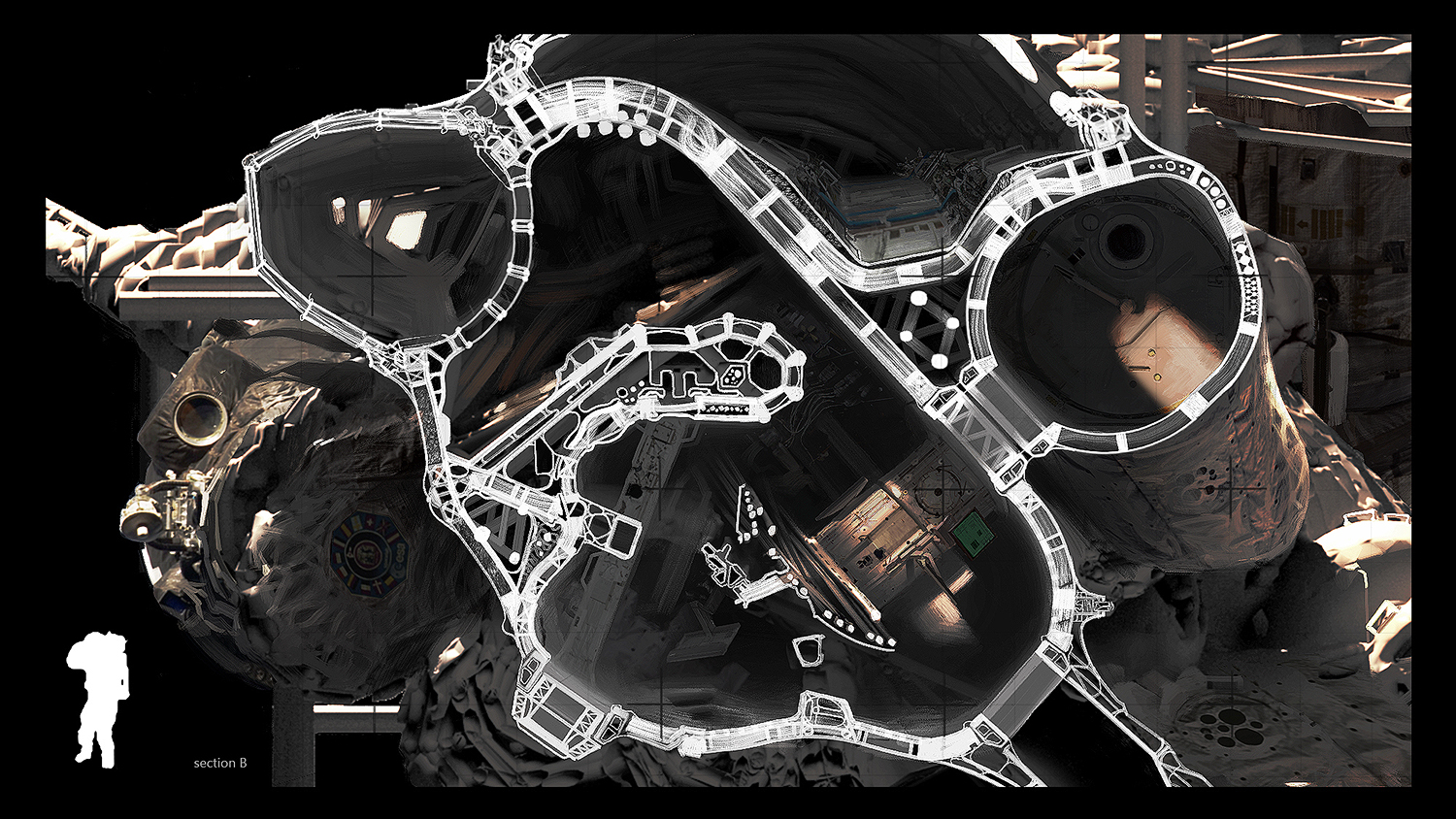
What we are looking at, is a mixture of these processes, blending together different approaches. Some of them engage reference points which disturb new or alter existing geometry attributes. The result has some architectural properties such as volumes and surface diversity. I was able to work with it later on (for example the space station section image where you can see splitting, inflating or surface blistering)
I would like to share some Houdini scripts I’ve done during this little workshop. It is a mixture of my own codes and those, I borrowed from various tutorials, mostly by
Digital assets are available at Orobolt.com. After downloading and installation, it will be probably locked. Right-click a node and select “Allow editing of contents“.
- single point attractor

- multiple points attractors

- point projector

- connections

- sinus waves
One last tip for those, who would like to understand programming basics. Go and check “Coding train”, a YouTube channel by Daniel Shiffman. Especially his tutorials for Processing. You will get an amazing series of lectures on programming in Java, which is fairly similar to VEX.
Thank you for your time and enjoy…